What is Ceviche?
A short, sourced guide to Peru’s national dish — what it is, where it comes from, how it’s made, and why it’s safe.
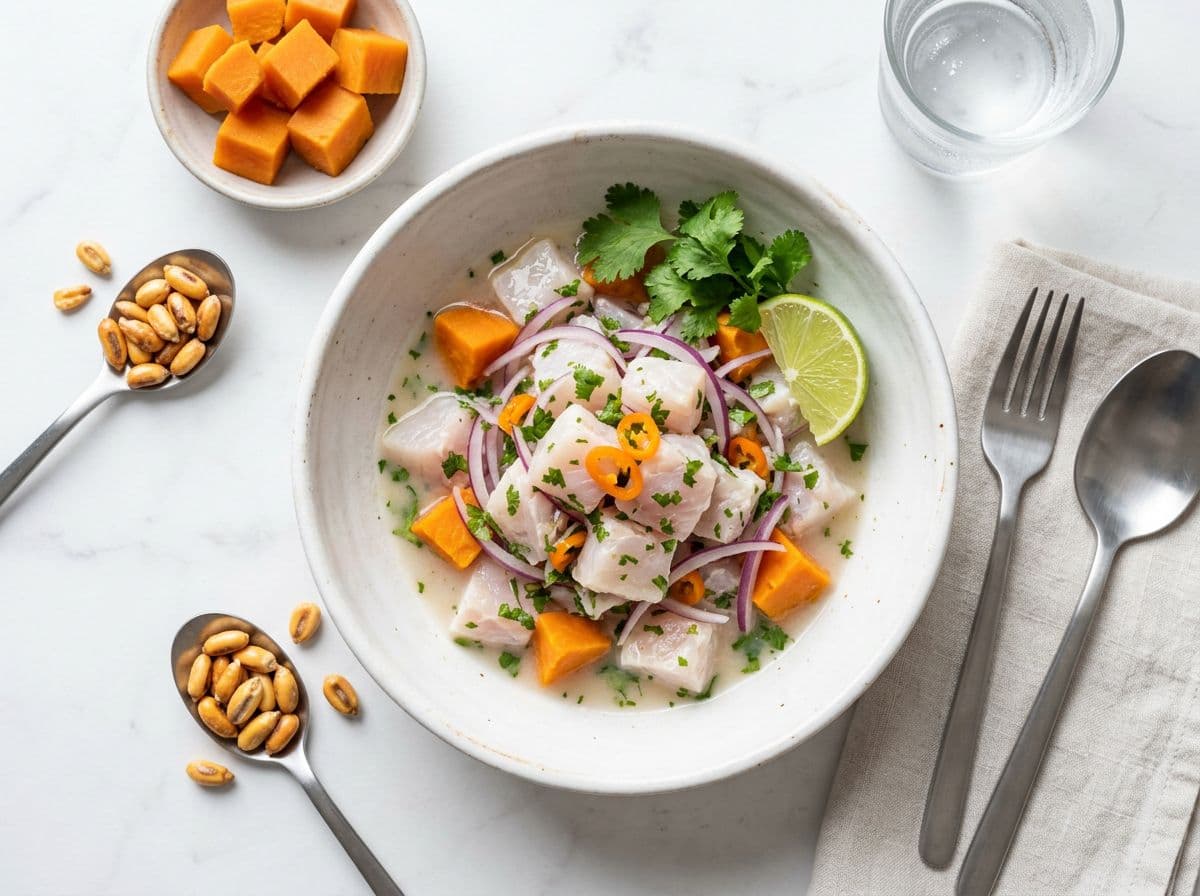
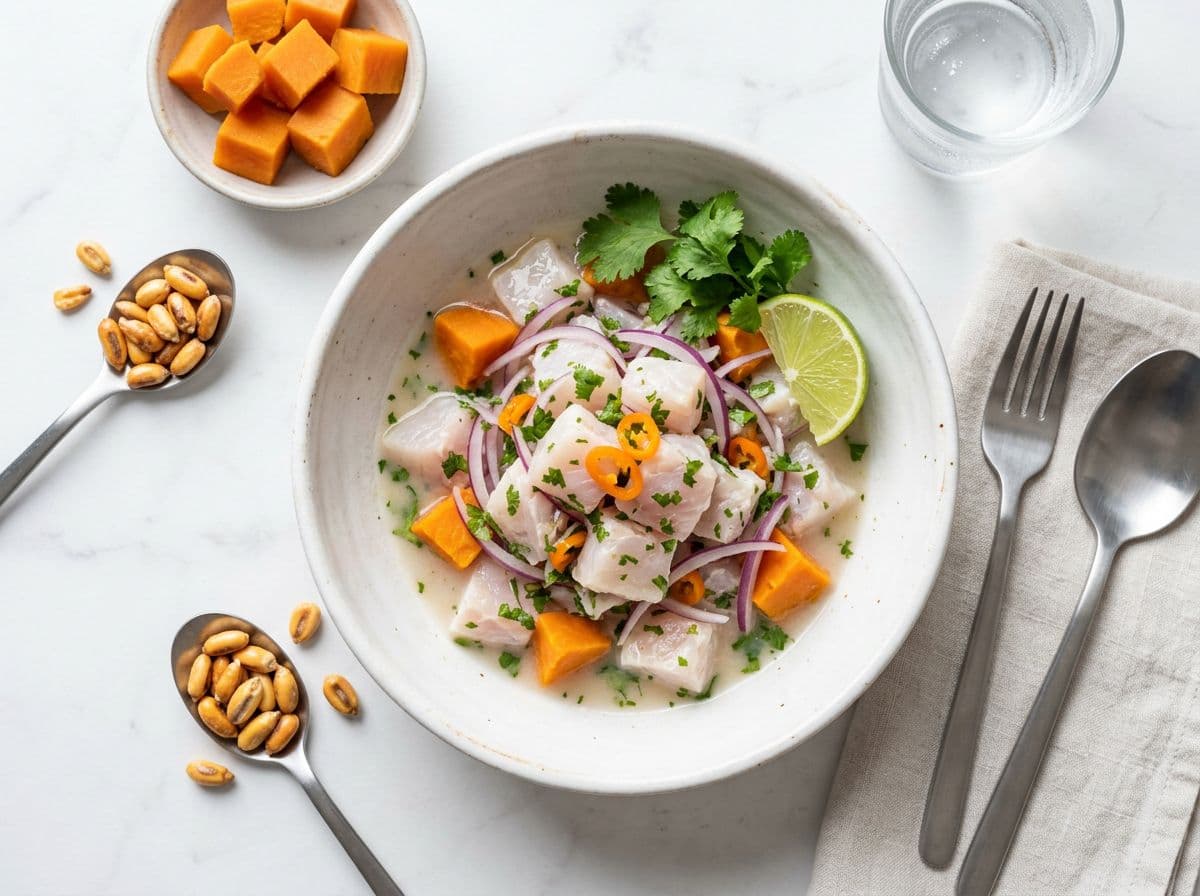
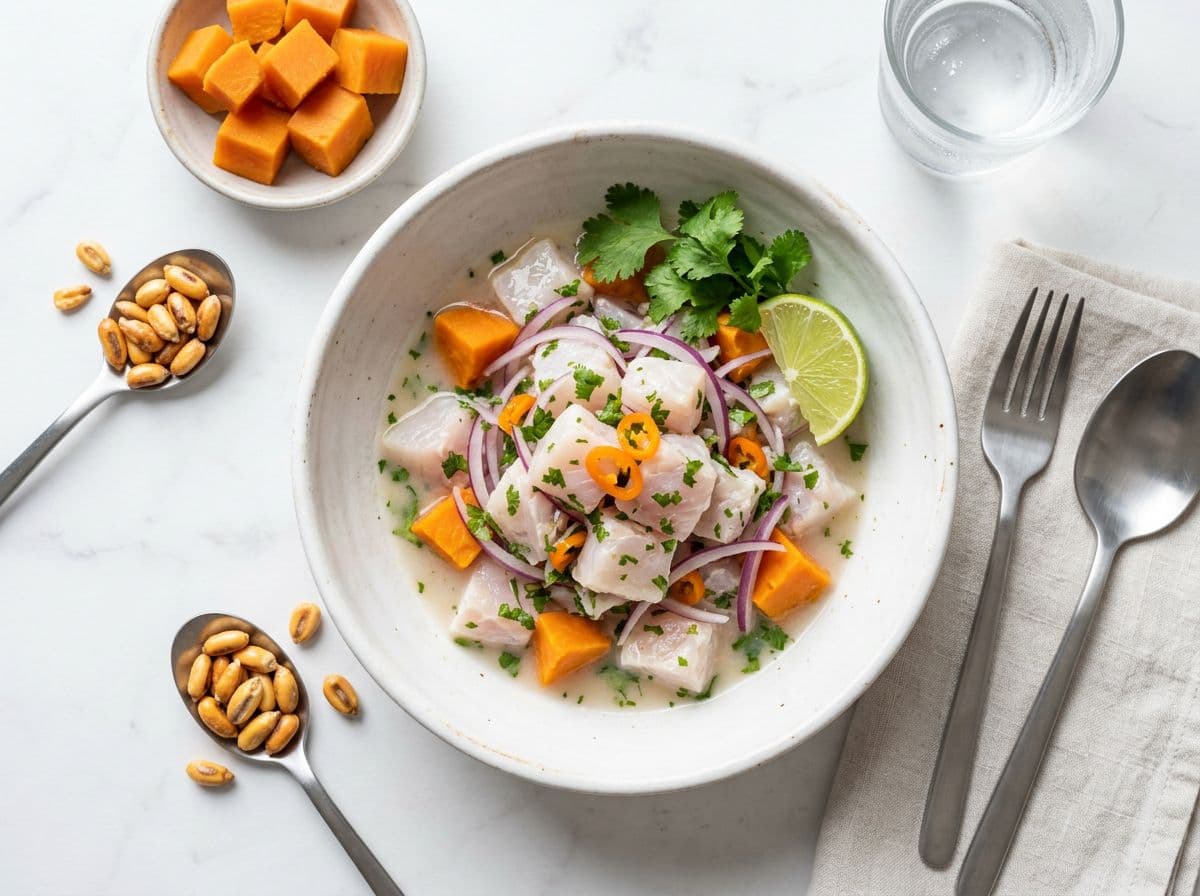
Ceviche is a Peruvian dish of fresh raw fish cured in citrus juice — almost always lime — and seasoned with salt, sliced red onion, aji peppers, and cilantro. The acid in the lime gently denatures the fish, firming and opaquing it the way heat would, without any cooking.
FromtheMochetothemoderncevichería
Ceviche is unambiguously Peruvian. The earliest forms came from the Moche civilization on Peru’s northern coast roughly two thousand years ago, who cured fresh fish in the fermented juice of the tumbo, a tart Andean passionfruit. Other variations along the Inca trade routes used chicha — fermented corn beer — as the acid.
When the Spanish arrived in the 16th century, they brought limes and red onions from the Mediterranean, which fused with the indigenous technique into the dish recognized today. In 2004, Peru’s National Institute of Culture (INC) officially declared ceviche part of the country’s Cultural Patrimony, and June 28 was designated Día Nacional del Ceviche.
ThefiveelementsofPeruvianceviche
Strip ceviche back to its essentials and you’re left with five ingredients. Everything else is variation.
- 01
Fresh white fish
Traditionally corvina (sea bass) in Peru. Any firm, mild, sushi-grade white fish works — flounder, halibut, snapper, sole. Must be cut to order; never frozen-thawed for serving.
- 02
Lime juice
Key lime is closest to Peruvian limón. The acid (citric acid, ~6% concentration) is what denatures the fish protein. Hand-squeezed only — bottled juice oxidizes and turns bitter.
- 03
Salt
Salt opens the proteins to the acid, accelerating the cure. Without it, the lime alone takes much longer to work.
- 04
Red onion
Sliced thin (paper-thin in Peru — pluma de cebolla). Soaked briefly in cold water to soften the bite. Adds crunch and sweetness against the acid.
- 05
Aji peppers
Either aji limo (bright, floral, hot) or aji amarillo (fruity, medium heat). The heat is restrained — ceviche is bright, not aggressive.
Howlime‘cooks’rawfish
The fish in ceviche is technically raw, but it isn’t served raw. The citric acid in lime juice — about 6% by weight — chemically alters the fish protein in a process called denaturation. Heat does the same thing, just faster.
As the acid penetrates the fish, long protein chains unfold and re-link, turning the flesh from translucent to opaque and firming the texture. The visual change happens within minutes; the bacterial impact takes longer. That’s why the freshness of the fish matters more than the cure time — the lime makes it look cooked, but it doesn’t make unsafe fish safe.
Themostprizedpart:lechedetigre
Leche de tigre — ‘tiger’s milk’ — is the citrus marinade left at the bottom of the bowl after the fish is cured. It’s a concentrated mix of lime juice, fish liquor, aji, garlic, and salt. In Peru it’s served as a small shot alongside the ceviche, and reputed to cure hangovers and act as an aphrodisiac. Drink it. It’s the whole point.
Peruviancevichevsotherstyles
Many countries on the Pacific coast claim a ceviche. They aren’t the same dish.
Peruvian (the original)
Raw fish, lime, salt, onion, aji. Cured briefly — 5 to 15 minutes — so the fish stays tender. Served with sweet potato (camote), corn (choclo), and toasted corn (cancha). Bright, sharp, clean.
Ecuadorian
Often uses cooked shrimp rather than raw fish, served in a tomato-based broth with orange juice. More like a chilled soup than the Peruvian original.
Mexican
Usually chopped (not sliced) and mixed with tomato, jalapeño, cucumber, and avocado. Marinated for hours, not minutes. Served with tostadas. A different texture and intent — closer to a salsa than the Peruvian dish.
HowCVCHÉmakescevicheinHouston
We make every ceviche the Peruvian way: fish cut to order, cured briefly in hand-squeezed lime, finished with sliced red onion, aji, and fresh cilantro. Nothing pre-mixed, nothing sitting in marinade.
Our white fish comes in fresh daily. Our shrimp comes from the Gulf. Leche de tigre is made in-house each morning. Every bowl is plated within five minutes of you ordering it — because the difference between great ceviche and good ceviche is exactly how long it’s been sitting.
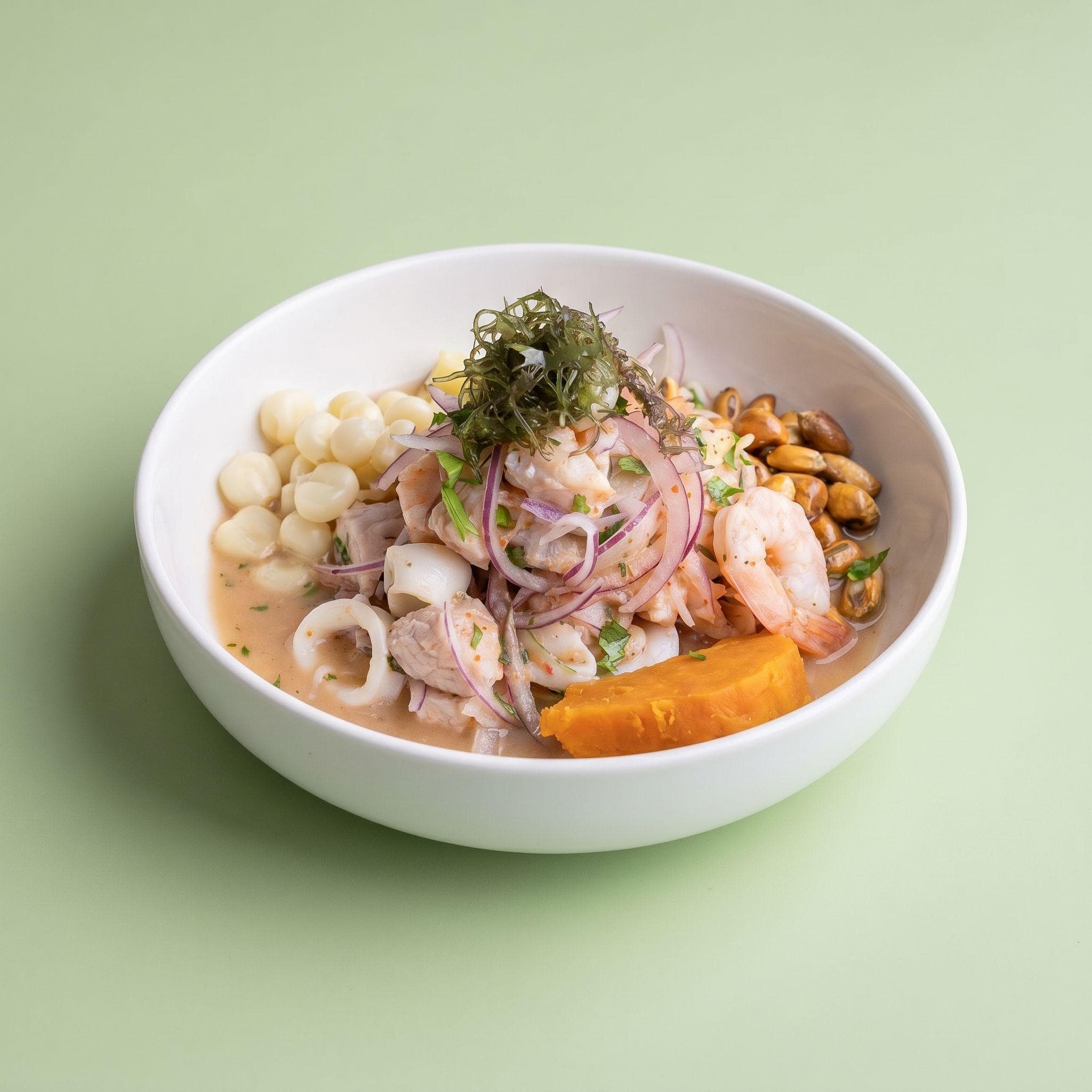
Sixcevichestotry
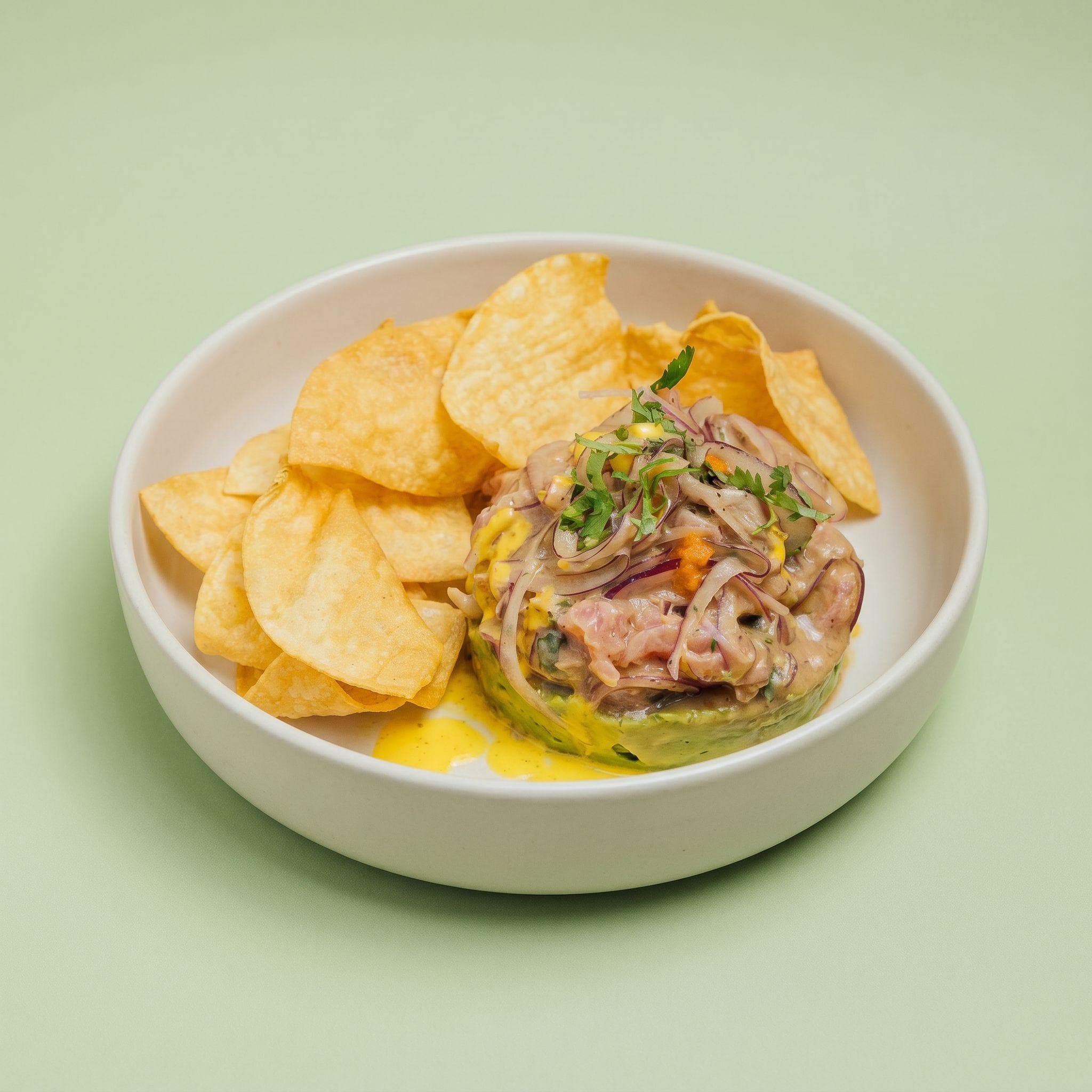
From the classic lime-cured white fish to the Nikkei (Peruvian-Japanese fusion) and our Houston-born Ceviche 713 — each one is a different angle on the same five elements.
Whattodrinkandservewithceviche
Chicha morada (purple corn drink) is the traditional pairing — its sweetness balances the lime. A pisco sour also works, and on a hot day a cold Peruvian beer like Cusqueña does the trick. Skip heavy reds.
Sweet potato (camote), boiled Andean corn (choclo), and toasted corn (cancha) are the classics — three textures and a hit of sweetness against the acid. Yuca a la huancaina works as a starter.
Moreaboutceviche
Is ceviche raw fish safe to eat?
Yes, when the fish is fresh and handled correctly. The lime juice denatures the protein but doesn’t kill all bacteria or parasites — so the safety comes from sourcing, not the cure. Reputable cevicherías use sushi-grade fish handled to FDA cold-chain standards, and prepare ceviche to order rather than letting it sit. Pregnant people and the immunocompromised should consult a doctor before eating raw or acid-cured fish.
Is ceviche gluten-free?
Traditional Peruvian ceviche is naturally gluten-free — fish, lime, salt, onion, aji, cilantro, and the classic sides of sweet potato and corn contain no gluten. Always confirm with the restaurant if you have celiac disease, since cross-contamination can happen in shared kitchens.
How long can ceviche sit before serving?
Not long. The Peruvian style cures the fish for 5 to 15 minutes max, then serves immediately. Past about 30 minutes the lime over-cures the fish, the texture turns rubbery, and the flavor turns harsh. Ceviche is the opposite of a make-ahead dish — it’s built to be eaten the moment it’s made.
What fish is best for ceviche?
Firm, mild, white-fleshed saltwater fish. Traditional Peruvian choice is corvina (sea bass). Flounder, halibut, snapper, grouper, and sole all work. The fish should be sushi-grade — not previously frozen for retail, handled under cold-chain conditions. Oily fish like salmon or tuna are used in modern variants (Nikkei-style) but aren’t traditional.
What’s the difference between ceviche, aguachile, and poke?
Ceviche (Peruvian) cures raw fish in lime juice for a few minutes, served bright and acidic with onion and aji. Aguachile (Mexican) uses raw shrimp in a much more intense, herb-and-chili-driven cold broth, served immediately with no real cure time. Poke (Hawaiian) is fully raw — cubed sashimi tossed in soy and sesame, no acid cure. Three different cuisines, three different dishes.
Relatedreading
Try real Peruvian ceviche in Houston
Reading about it only goes so far. CVCHÉ is in The Conservatory food hall in the Galleria — open daily, made to order in minutes.