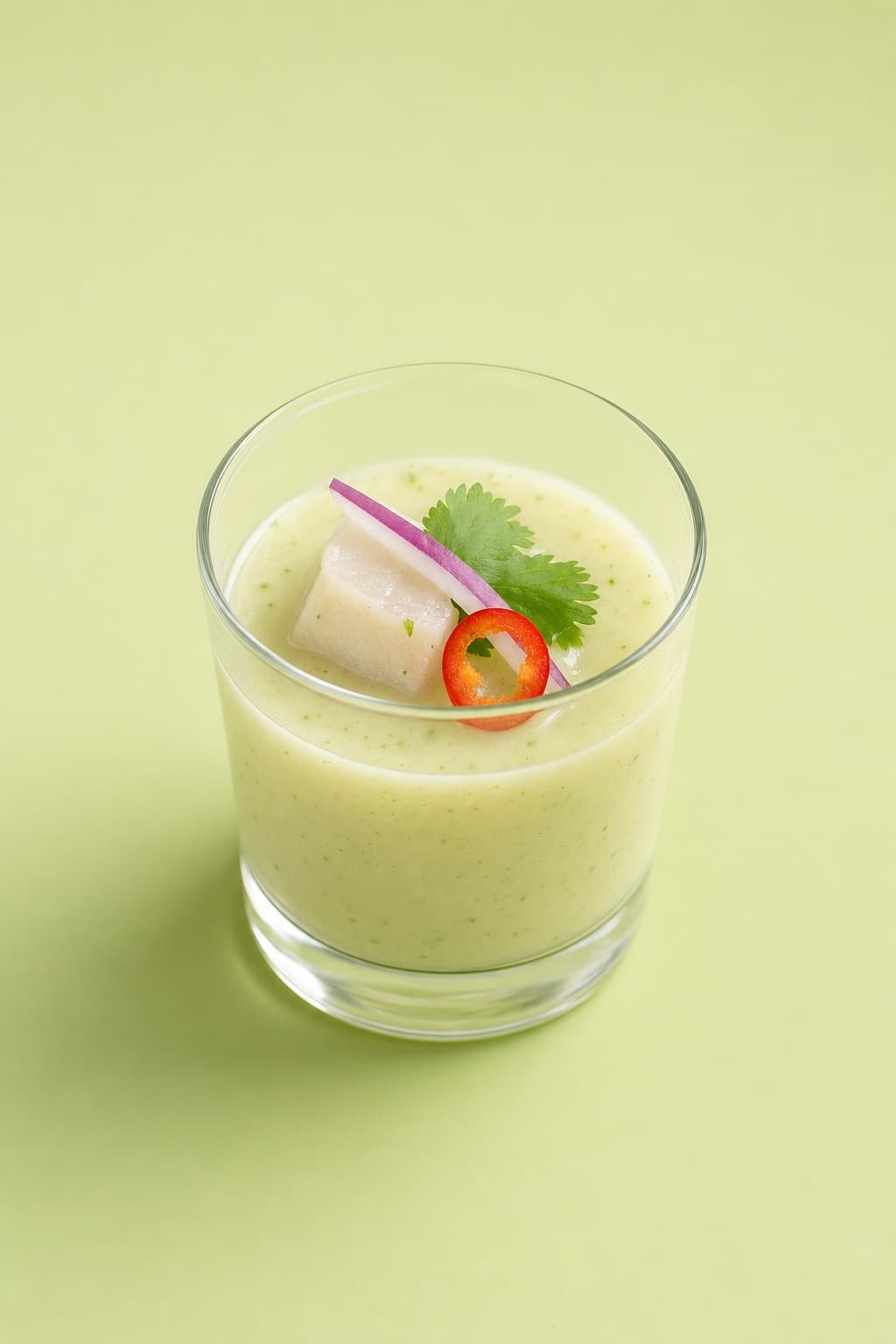
What is Leche de Tigre?
The bright, citrusy elixir at the bottom of every Peruvian ceviche bowl — part marinade, part shot, part legend.
Leche de tigre — literally ‘tiger’s milk’ — is the milky-white citrus marinade left over after curing fish for ceviche. It’s a concentrated blend of lime juice, fish liquor, aji peppers, garlic, and salt. In Peru it’s served as a small shot alongside ceviche, drunk straight, or used as the base for cocktails and chasers.
What’sinashot
Strip leche de tigre to its core and you’re left with five ingredients. The proportions are what separate a great one from a mediocre one.
- 01
Fresh lime juice
The body of the shot. Hand-squeezed key lime — never bottled. About 60% of the liquid.
- 02
Fish liquor
The juices released by the fish as it cures. Adds salinity, body, and the iconic milky color. Without it you have lime juice with stuff in it — not leche de tigre.
- 03
Aji limo or aji amarillo
Floral heat, not aggressive. Aji limo for the classic Lima style; aji amarillo for a softer, fruitier version.
- 04
Garlic & ginger
Raw, microplaned. Subtle — they’re there for backbone, not flavor lead.
- 05
Salt & fresh cilantro
Salt opens the proteins and amplifies everything. Cilantro stems (not leaves) add a clean herbal lift.
FourwaysPeruviansactuallydrinkit
Leche de tigre is meant to be drunk — not just left in the bowl. Here’s how it shows up in Lima.
In your ceviche bowl
The traditional default. The fish soaks in it; you spoon the rest at the end. Don’t skip the bottom of the bowl.
As a side shot
Served in a 2–3 oz glass next to the ceviche. Drink it before, between, or after bites. The classic Lima cevichería move.
As a cocktail base
Modern bartenders mix it with pisco for a savory, oceanic riff on a sour. Lima’s top bars all have a version.
As a chaser or pick-me-up
Late-night Lima tradition: ceviche bars stay open past 2 AM specifically so you can stop in for a leche shot on the way home.
Hangovercure,aphrodisiac,miracleelixir
Leche de tigre carries a heavy mythology in Peru — it’s sworn by as a hangover cure (the salt, citrus, and electrolytes do help), and reputed to be an aphrodisiac (less scientific consensus on that one). The truth is probably simpler: it’s cold, bright, sharp, and packed with flavor, and it hits like nothing else at the bottom of an empty glass. Try it. Decide for yourself.
HowCVCHÉmakeslechedetigre
We make a fresh batch every morning. It uses the same fish trim and citrus as the ceviche bar — nothing wasted, nothing pre-mixed.
Every ceviche we serve comes with its own leche de tigre at the bottom of the bowl. If you want it as a shot, just ask — we’ll pour you 2 oz in a glass on the side. It’s how it’s done in Lima.
Moreaboutlechedetigre
Is leche de tigre safe to drink straight?
Yes, when made with fresh, sushi-grade fish handled properly. The salt and acid keep bacterial growth down, and it’s typically consumed within minutes of being made. People who shouldn’t eat raw or acid-cured fish (pregnant, immunocompromised) should skip it as well.
What does it taste like?
Sharp, citrusy, saline, with a quick floral heat from the aji. Slightly creamy from the fish liquor. Imagine a Bloody Mary reimagined by the ocean. It’s strong on the first sip and addictive by the third.
Can you make it without fish?
Technically yes — vegan ‘leche de tigre’ versions use coconut milk or cashew cream for the body and miso for the umami. But traditional leche de tigre depends on the fish liquor for both color and depth. Without it, it’s a lime-aji shot — good, just not the same dish.
How long does leche de tigre keep?
Not long. The acid degrades the fish quickly. Best within 30 minutes of being made; absolute maximum 24 hours refrigerated, and the flavor will be noticeably worse. It’s a same-day drink.
Is it alcoholic?
Traditional leche de tigre, no — it’s lime, fish, aji, garlic, salt. The pisco sour version (mixed with Peruvian pisco brandy) is. Always ask if you’re unsure.
Relatedreading
Get your shot of leche de tigre in Houston
Order any ceviche at CVCHÉ and the leche de tigre comes with it — at the bottom of the bowl, or in a side glass if you ask.