What is Causa?
A cold, layered Peruvian potato terrine — yellow with aji, bright with lime, stacked like a small architectural object.
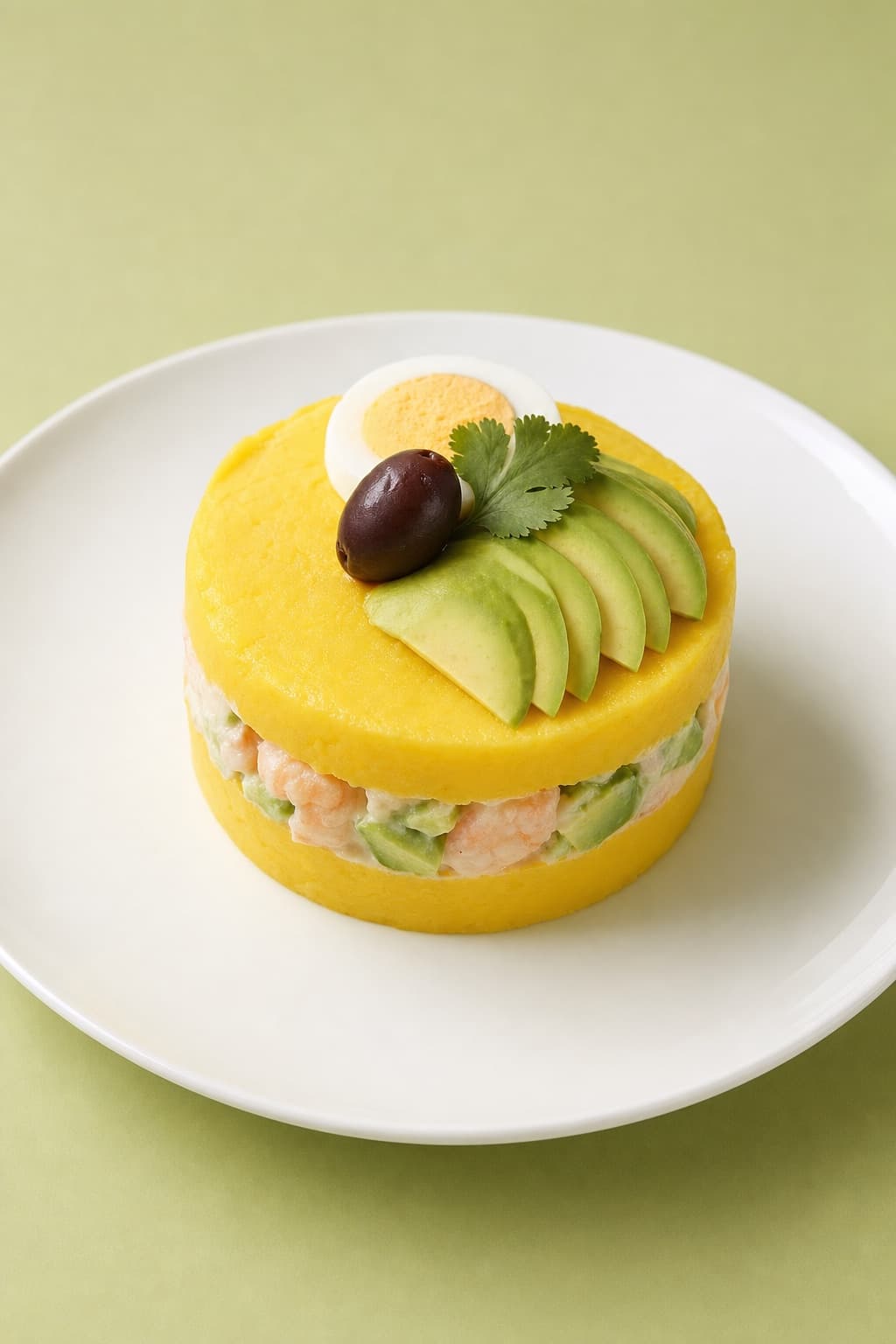
Causa is a Peruvian cold appetizer made by mashing yellow potato (papa amarilla) with lime juice and aji amarillo paste, then layering it with a filling — typically chicken, tuna, shrimp, or avocado — and topping it with mayonnaise or salsa. It’s served cold, sliced or molded, and almost always as a starter or light lunch.
Peru’s4,000-year-oldpotatostory
Peru is the birthplace of the potato. The Andes mountains around Lake Titicaca are where wild potatoes were first domesticated roughly 8,000 years ago, and where they’ve been bred ever since. The country’s International Potato Center (CIP) in Lima maintains over 4,000 distinct varieties — more than anywhere else on Earth. What Americans call ‘a potato’ is a sliver of what Peruvians grow.
Papa amarilla — the yellow potato that defines causa — is one of the most prized of those varieties. It’s denser and more floury than a Yukon Gold, with a buttery flavor and a vivid yellow flesh that needs no help to look appetizing. Causa wouldn’t exist without it. Other Peruvian potato dishes — papa a la huancaína, papa rellena, ocopa — all rely on different native potato varieties for different textures. The potato isn’t a side in Peru. It’s the foundation.
Thefourlayersofaclassiccausa
Causa is built like a small architectural object. Each layer does a specific job — and skipping any of them turns it into a different dish.
- 04
Yellow potato mash
Boiled papa amarilla, riced through a food mill (not blender — that turns it gluey), seasoned with lime, aji amarillo, salt, and a touch of oil. This is both the base AND the top — the filling sits between two layers.
- 03
The filling
Most often chicken salad, tuna salad, or shrimp salad — bound with mayonnaise. The filling is meant to be cool, creamy, and quietly seasoned. The potato is the star.
- 02
Avocado (often)
A layer of sliced ripe avocado either inside the filling or between the layers. Adds fat, color, and a soft texture contrast.
- 01
The top & garnish
Another layer of potato seals it, finished with mayo, sliced hard-boiled egg, olive, and a drizzle of aji or huancaina sauce. The presentation matters — causa is usually plated in a ring mold and unmolded onto the plate.
Classicfillings
The potato base stays the same; the filling defines the version. These are the four you see most often on Peruvian menus.
Causa de pollo
Shredded poached chicken bound with mayonnaise, finely diced celery, and a touch of mustard. The most common version — the workhorse of Lima lunch menus.
Causa de atún
Canned tuna (in oil), mayo, finely diced red onion. Quick, accessible, surprisingly good — the Tuesday-night version that proves the dish works with humble ingredients.
Causa de camarón
Cooked shrimp, mayo, often with a touch of huancaína sauce mixed in. Pricier and more impressive — the order at a nicer restaurant.
Causa de pulpo
Octopus — tender, sliced thin, dressed simply with olive oil and aji. The chef-y, modern variant you’ll see at higher-end Peruvian restaurants.
Whycausaisalwaysservedcold
Lima sits in a coastal desert that bakes for half the year. Cold food isn’t a stylistic choice — it’s a climate response. The cold potato keeps the lime and aji flavors crisp; warmed up, the mayo splits and the dish turns muddy. A proper causa comes straight from the fridge, the potato firm, the filling cool, the aji bright. It’s the inverse of comfort food — a refreshment, not a hug.
HowCVCHÉdoescausa
We use yellow potato — the real papa amarilla when we can source it, or the closest US equivalent (Yukon Gold pushed through a ricer, treated to mimic the floury Peruvian texture).
The lime is hand-squeezed, the aji amarillo is paste (the realistic US option), and the assembly is to-order — so the layers stay distinct. Three filling options on the menu: shrimp, chicken, and tuna. Always plated cold.
Moreaboutcausa
Can I find yellow potato (papa amarilla) in the US?
Rarely fresh, but available frozen at Latin grocers (often labeled ‘papa amarilla’) and online. Yukon Gold is the standard substitute — riced (not mashed with a beater), with a touch more butter, to get close to the floury Peruvian texture. The flavor won’t be identical but the dish works.
Is causa gluten-free?
Yes — potato, lime, aji amarillo, mayo, and the filling proteins (chicken/tuna/shrimp/avocado) all contain no gluten. Confirm with the restaurant about cross-contamination if you have celiac, especially the mayo (some commercial mayos contain trace gluten).
Can you make causa ahead of time?
Yes — better, actually. Causa is meant to rest cold so the flavors meld. Assemble it 2–4 hours before serving and refrigerate, garnish at the moment of plating. It’s one of the few dishes that genuinely improves in the fridge.
What does papa amarilla taste like?
Buttery, slightly sweet, dense, floury. The texture is what makes it special — it goes through a ricer into something almost cake-like rather than wet or gluey. The flavor is more pronounced than a Russet, less waxy than a fingerling. The yellow color is natural, not from added aji.
Is causa spicy?
Mildly. The aji amarillo paste in the base adds a subtle fruity warmth — not heat. Most versions are very gentle. If you want more, ask for extra aji on the side; if you want none, ask for it without.
Try causa in Houston
Yellow potato, lime, aji amarillo, layered cold the Lima way. Three fillings — shrimp, chicken, or tuna.