What is Lomo Saltado?
Peru’s most famous wok-fried dish — invented by Chinese immigrants, perfected in Lima kitchens, served on the same plate as fries AND rice.
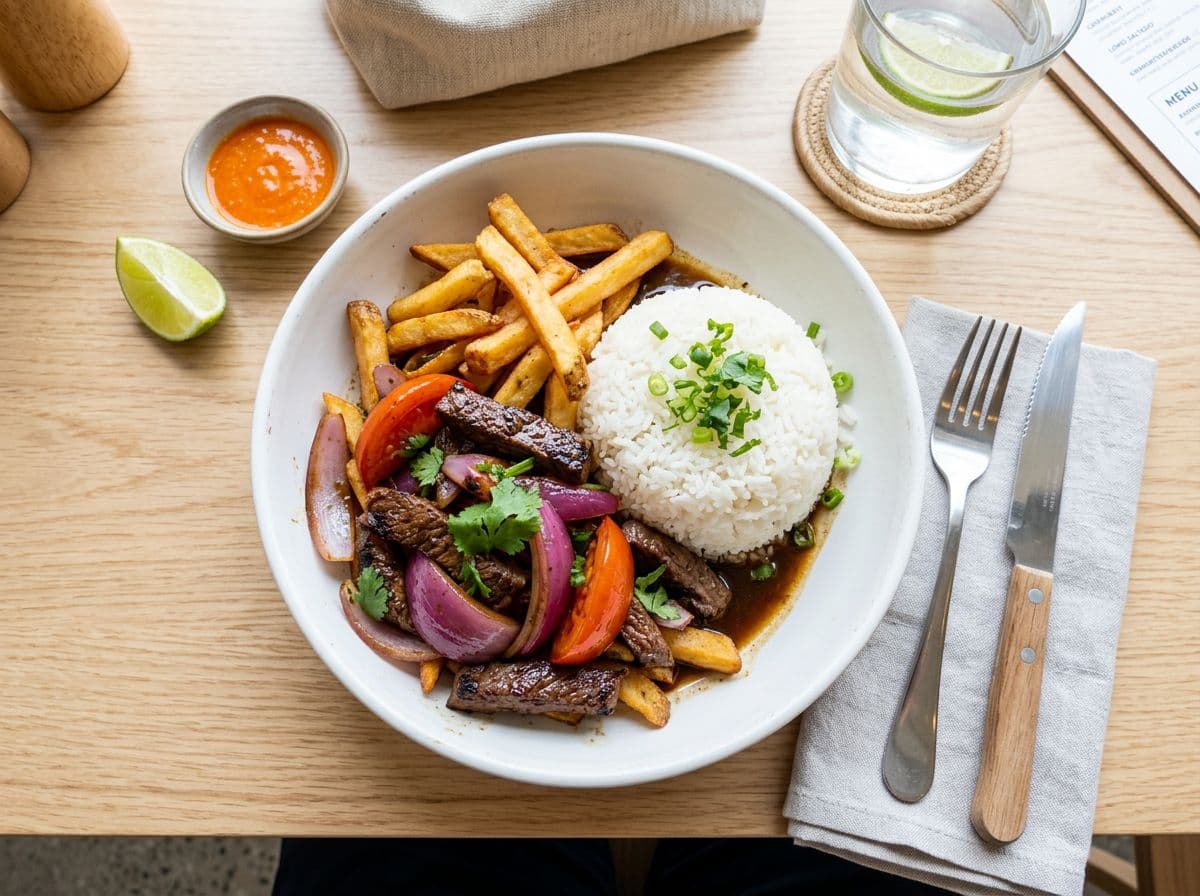
Lomo saltado is a Peruvian stir-fry of marinated beef sirloin, red onion, tomato, and aji amarillo, finished with soy sauce, vinegar, and a squeeze of lime — wok-tossed over high heat. It’s plated over rice with French fries on top, and it’s probably Peru’s most popular dish after ceviche.
HowChineseimmigrantsinventedPeru’swokcuisine
Lomo saltado is the most famous dish in chifa — Peruvian-Chinese fusion cuisine. Chifa was born in the second half of the 19th century, when tens of thousands of Cantonese workers were brought to Peru as indentured labor for sugar plantations and the guano trade. After their contracts ended, many settled in Lima’s Capon Street neighborhood and opened restaurants.
They cooked with what they had: local Peruvian ingredients — aji peppers, lime, potatoes, tomato — using Chinese techniques and Chinese pantry staples like soy sauce, ginger, and the wok. Chifa is now Peru’s second cuisine (after Peruvian) by number of restaurants. Lima alone has an estimated 6,000+ chifa restaurants. Lomo saltado is the dish where you can taste the entire history of that fusion in a single bite.
Saltadomeans‘jumped’—andthat’sthewholesecret
The word ‘saltado’ comes from saltar, ‘to jump,’ a reference to the way ingredients literally jump in a screaming-hot wok during the toss. The entire cook takes 60 to 90 seconds — beef seared just past rare, vegetables crisp-tender, the bottom of the pan glazed with a quick deglaze of soy and vinegar. Slow it down and you have a stew. Fast and hot is the whole point.
Whatgoesintoalomosaltado
Six core ingredients, plus the two starches. Every Peruvian household tweaks the proportions, but the bones don’t change.
- 01
Beef sirloin
Sliced against the grain, ½-inch strips. Cut from the lomo (sirloin/tenderloin). Marinated briefly in soy and vinegar.
- 02
Red onion
Cut into thick wedges, not slices. Goes in last so it stays crunchy with just a touch of char.
- 03
Roma tomato
Also wedged, not diced. Added at the end so it warms through without breaking down into sauce.
- 04
Aji amarillo
Sliced thin or as paste. Brings the fruity, sunny heat that distinguishes lomo from a generic stir-fry.
- 05
Sillao (soy sauce)
The Chinese DNA. About 2 tablespoons per portion. Adds umami, salt, and the dark glaze on the beef.
- 06
Red wine vinegar & lime
Splash of each at the end. The vinegar deglazes the pan; the lime keeps everything bright.
Othersaltados
‘Saltado’ is a technique, not just a dish — once you know it, you can saltado anything.
Pollo saltado
Same dish, chicken instead of beef. Common weeknight version — the chicken cooks faster and stays juicy.
Mariscos saltados
Shrimp, squid, and white fish wok-tossed the same way. Coastal Peru variant — lighter, faster.
Tallarín saltado
Same flavors, swapped onto wheat noodles instead of rice and fries. Pure chifa territory — basically Peruvian lo mein.
HowCVCHÉmakeslomosaltado
We use beef sirloin sliced fresh, never pre-marinated. The wok hits screaming hot before the beef goes in — that quick sear is what builds the flavor.
Our version stays true to the chifa standard: thick onion wedges, ripe tomato, aji amarillo, sillao, splash of vinegar, finished with lime. We plate it the right way — over rice, fries on top, lime wedge on the side. No deconstruction, no fusion-of-the-fusion. Just the real thing.
Moreaboutlomosaltado
Why is lomo saltado served with fries AND rice?
Cultural insistence. Rice is the everyday starch in Lima households (a chifa influence); fries are the wok-friendly potato form that absorbs the pan sauce best. Asking a Peruvian to choose one is like asking an American to choose between fries and bun for a burger. Don’t.
Is lomo saltado spicy?
Mildly. Aji amarillo brings warmth but not real heat — it’s closer to a fruity, sunny pepper than a habanero. If your tolerance is low, ask for it on the side. If you want more, order extra aji on the side.
What cut of beef is best?
Traditionally beef sirloin (lomo). Beef tenderloin works and is more tender but loses some of the chew that gives the dish its character. Skirt steak is a good budget swap. Avoid lean cuts like eye of round — they go tough at high heat.
Is lomo saltado gluten-free?
Standard versions are not — soy sauce contains wheat. A gluten-free version is straightforward: swap to tamari or a gluten-free soy sauce. Most Peruvian restaurants will accommodate if asked.
Wok or regular pan?
Wok is best — it’s built for high-heat fast cooking and the rounded sides let you toss without losing pan contact. A heavy cast-iron pan works in a pinch. Whatever you use, get it ripping hot before the beef goes in. The dish lives or dies on that initial sear.
Relatedreading
Order lomo saltado in Houston
Made the chifa way — wok-tossed beef sirloin, aji amarillo, sillao, fries AND rice. Order online or visit us at the Galleria.