What are Anticuchos?
Peru’s most loved street food — smoky, charred, marinated skewers, sold off carts on Lima street corners after dark.
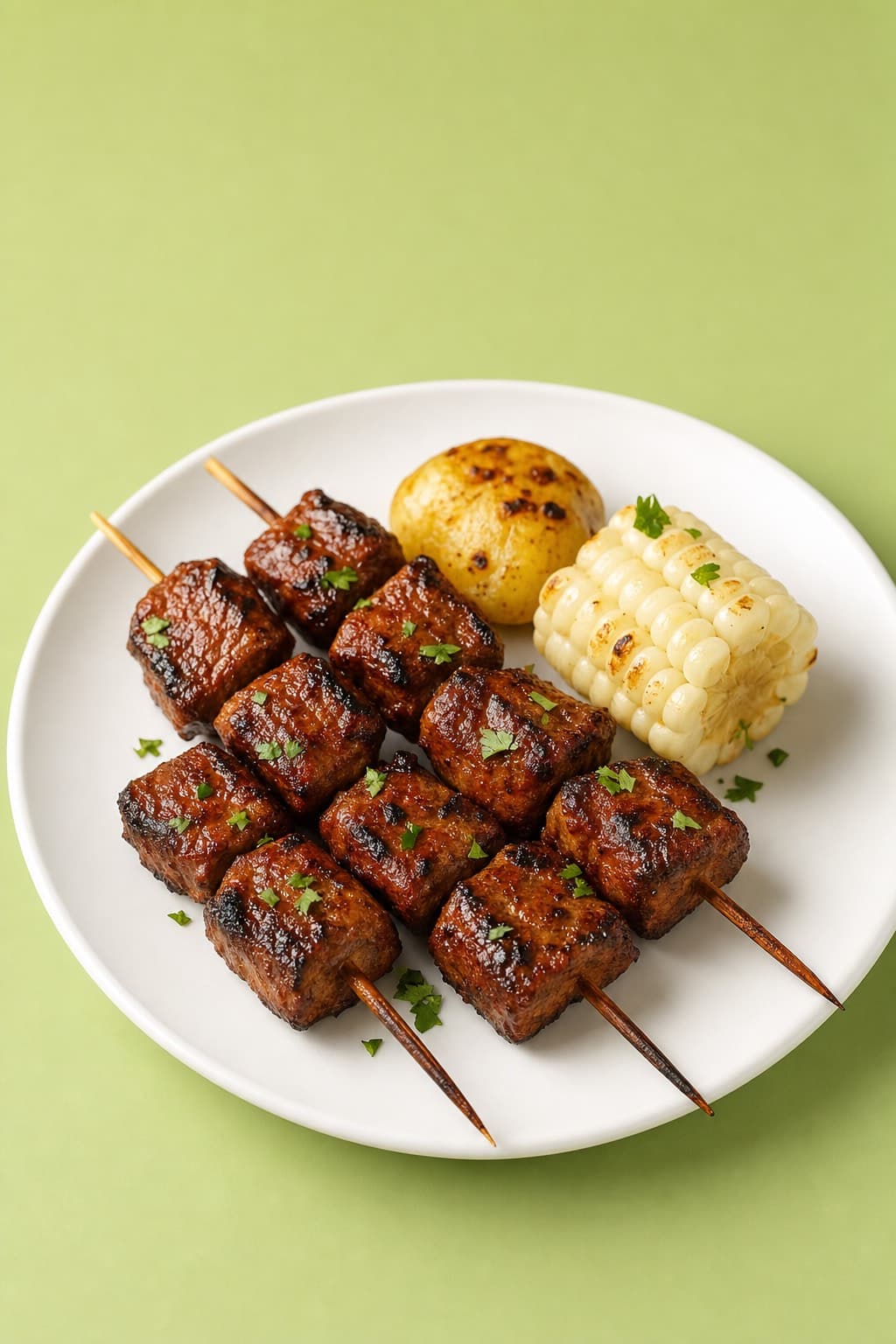
Anticuchos are Peruvian grilled meat skewers, traditionally made from marinated beef heart (corazón) and finished over an open flame. The marinade is built on aji panca paste, vinegar, garlic, cumin, and oregano. They’re typically served three skewers to a plate with boiled potato, choclo, and aji sauce — and almost always eaten on the street, standing up, late at night.
FromcolonialLimatostreet-foodicon
Anticuchos trace back to colonial-era Lima in the 16th century. African slaves brought to Peru were given the discarded organ meats of livestock — including the hearts — that the Spanish wouldn’t eat. They marinated the meat in vinegar, garlic, cumin, and indigenous aji peppers, threaded it onto sugarcane sticks, and grilled it over open coals. The result was hearty, deeply flavored food made from the cheapest possible cut.
Over centuries the dish moved from a meal of necessity to a Lima institution. Today, anticuchos are sold from carts at street corners across Peru — most famously around Plaza Italia in Lima — typically after sundown. The street vendor (anticuchero) is its own job title with multi-generational lineages. A good plate of anticuchos in Lima costs less than a few US dollars and is one of the city’s defining experiences.
Whatgoesinthemarinade
Six ingredients carry the entire flavor of an anticucho. The meat marinates for at least 4 hours; the best versions marinate overnight.
- 01
Aji panca paste
The backbone. A dried, smoky, mild red Peruvian pepper (1,000–1,500 SHU) ground into a deep-red paste. Provides color, smoke, and warmth without serious heat.
- 02
Red wine vinegar
Tenderizes the meat and cuts through the richness of the heart. About 2 tablespoons per pound of meat.
- 03
Garlic & cumin
Crushed fresh garlic plus toasted cumin seeds — the savory backbone underneath the smoke.
- 04
Dried oregano
Peruvian oregano specifically — earthier, mintier, more medicinal than Italian. Goes on the meat and into the marinade.
- 05
Aji amarillo paste
Often blended with the aji panca for a more rounded heat — fruity warmth on top of the smoke.
- 06
Salt & pepper
Aggressive salting before the grill — high-heat fire needs salt to build crust on the skewer.
Whybeefheart—andwhatitactuallytasteslike
Beef heart is a muscle, not an organ in the way liver or kidney are. It’s the densest, hardest-working muscle in the body, which makes it intensely lean, deeply beefy, and surprisingly tender when sliced thin against the grain. There’s no gaminess, no organ-meat funk — closer in flavor to a clean grass-fed sirloin than to anything you’d expect. It’s also one of the highest-protein, lowest-fat cuts of beef there is. The cultural distance from heart to ‘that sounds weird’ is American, not universal. Across Latin America, Asia, and Europe, heart has been a delicacy for centuries.
Anticuchosbeyondtheheart
Most modern Peruvian restaurants serve anticuchos in three or four proteins — the traditional corazón remains the standard, but the technique and marinade work beautifully with other cuts.
Beef heart (traditional)
Sliced thin, marinated overnight. Lean, dense, deeply beefy. The version every cevichería and anticuchería in Lima still serves.
Chicken (pollo)
Thigh meat preferred — stays juicy on the grill. The accessible option for first-timers. Most-ordered anticucho at modern restaurants outside Peru.
Beef sirloin or tenderloin
Higher-end, less traditional. Cooks fast and stays tender. A bridge for diners hesitant about the heart but wanting the marinade flavor.
HowCVCHÉdoesanticuchos
Our marinade is built the right way — aji panca paste, aji amarillo, red wine vinegar, garlic, cumin, oregano. The meat marinates overnight, never short-cut.
We grill over open flame to keep the char-and-smoke profile the dish demands. Three skewers to a plate, served with boiled potato and aji sauce on the side, the way Lima does it. Choose your protein — chicken (most popular for newcomers), beef sirloin, or the traditional corazón.
Moreaboutanticuchos
What does beef heart taste like?
Clean, deeply beefy, and surprisingly tender. The heart is pure muscle — no organ funk, no gaminess. Closer in flavor to a lean grass-fed sirloin than to liver or kidney. When sliced thin against the grain and marinated properly, it’s one of the most underrated cuts of beef.
Are anticuchos gluten-free?
The traditional marinade is naturally gluten-free — aji paste, vinegar, garlic, cumin, oregano, salt. Some modern marinades add soy sauce (which contains wheat). Always confirm with the restaurant if you have celiac disease.
Are anticuchos high in protein?
Very. Beef heart is one of the leanest, highest-protein cuts available — roughly 30g of protein per 4 oz serving with very little fat. Chicken thigh anticuchos run closer to 30–35g per serving. The dish is naturally a high-protein meal.
Do you have to order beef heart?
No. Most Peruvian restaurants in the US offer chicken and/or beef sirloin alongside the traditional corazón. If you’re new to anticuchos, chicken thigh is a great entry point — same marinade, same grill, more familiar texture.
What do you eat with anticuchos?
The classic plate is three skewers + boiled potato (papa amarilla) + choclo (Andean corn) + a small dish of aji amarillo sauce. The starch and corn balance the richness of the meat; the aji sauce adds brightness. A cold Cusqueña beer or chicha morada works as the drink.
Relatedreading
Try real Peruvian anticuchos in Houston
Charred, smoky, marinated overnight in aji panca. Choose chicken, sirloin, or the traditional corazón.