What is Aji Amarillo?
The yellow heart of Peruvian cuisine — a fruity, sunny chili that shows up in almost every classic Peruvian dish.
Aji amarillo (Capsicum baccatum) is a yellow-orange chili pepper native to Peru, with a fruity, sunny flavor and mild to medium heat (~30,000–50,000 SHU). It’s the single most important pepper in Peruvian cooking, used in ceviche, lomo saltado, ají de gallina, huancaina sauce, and dozens of other classic dishes — usually as a paste.
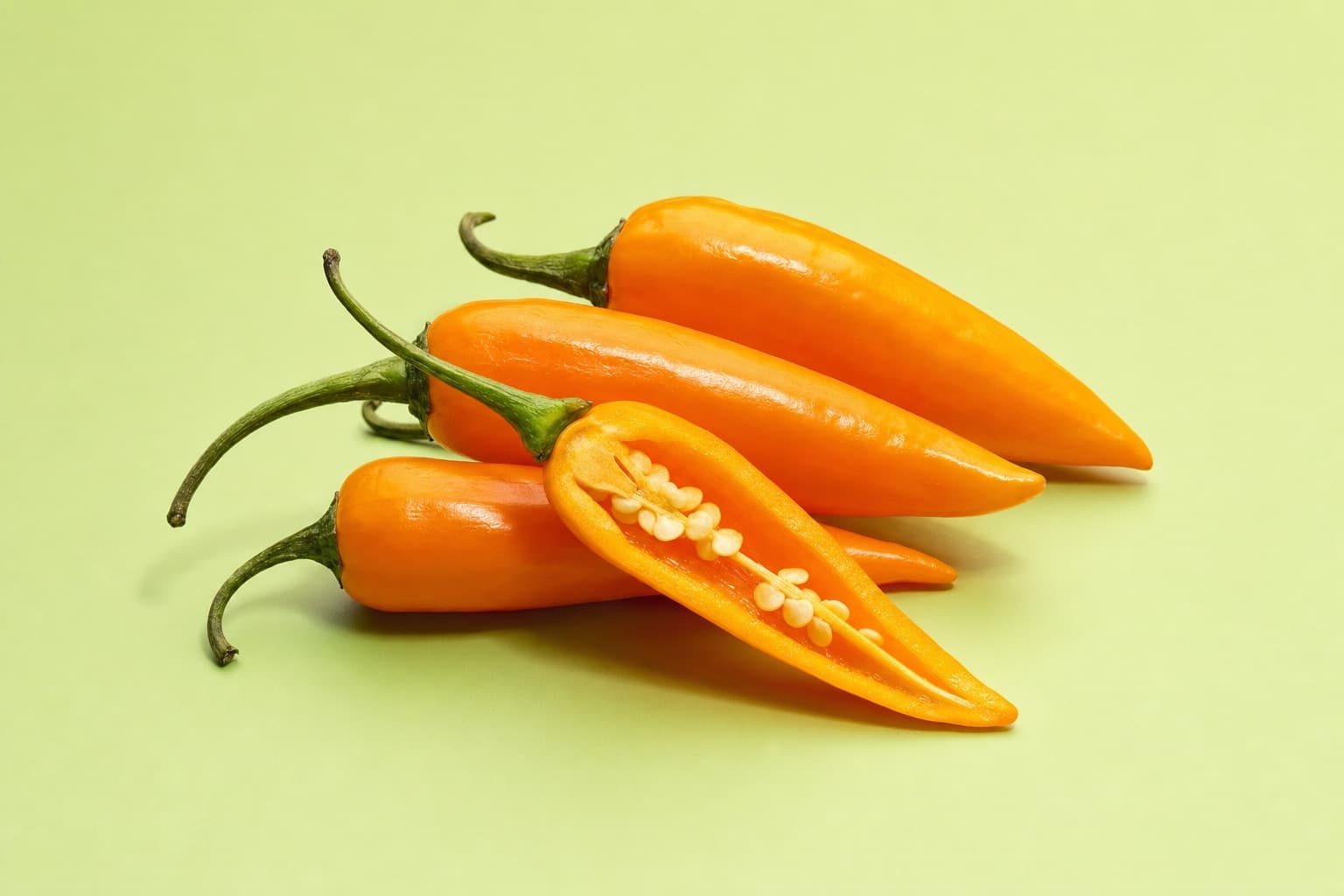
Whatajiamarilloactuallytasteslike
Aji amarillo doesn’t taste like other chilies. The flavor is fruity and floral — closer to a ripe mango or apricot than to the smoky/grassy/earthy notes you get from Mexican peppers. The heat builds slowly, peaks in the middle of your palate, and fades fast. It doesn’t linger.
That fruit-forward profile is why it works in so many roles: it adds dimension to a creamy huancaina sauce, it brightens a saltado without overpowering the soy, and it lifts ceviche without turning it spicy. If you’ve never had it before, the first taste is usually surprise — it’s not what most palates expect from a yellow pepper.
Howhotisajiamarillo,really?
On the Scoville scale — the standard measure of chili heat — aji amarillo lands in the middle. Hotter than a poblano, cooler than a habanero, roughly even with a serrano.
- Bell pepper0 SHU
- Poblano1,000–2,000 SHU
- Jalapeño2,500–8,000 SHU
- Aji amarillo30,000–50,000 SHU
- Habanero100,000–350,000 SHU
Howtobuyit
Aji amarillo comes in four forms. Which one to use depends on what you’re cooking — and what your local store actually stocks.
Fresh whole peppers
Rare in US grocery stores. Some specialty Latin markets stock them. Best for ceviche, where the fruity flavor is at the front.
Jarred paste (most common)
Sold as ‘pasta de aji amarillo’ in Latin grocery aisles and on Amazon. The default for cooking — adds color, flavor, and heat all at once. Keeps in the fridge for months.
Frozen whole peppers
Available at specialty Latin markets and online. Best of the non-fresh options for ceviche — preserves the floral notes better than the paste.
Powdered or dried
Less common. Used mostly for sprinkling at the end. Flavor is more muted than fresh or paste — fine for color but not the right tool for a sauce.
Dishesbuiltonajiamarillo
Aji amarillo isn’t a garnish — it’s the foundation. These are the dishes where it does the heaviest lifting.
Ají de gallina
Shredded chicken in a creamy aji amarillo sauce, served with rice and boiled potato. The dish the pepper is most associated with.
Causa rellena
The yellow color of causa comes from aji amarillo mashed into the potato. Without it, it’s just lemon potato.
Huancaina sauce
The famous yellow sauce on papas a la huancaína — aji amarillo, queso fresco, and evaporated milk blended smooth.
Lomo saltado
Sliced aji amarillo gives the wok-fired beef its fruity warmth — what distinguishes it from a generic beef stir-fry.
Ceviche
Many cevicherías use aji amarillo (instead of or alongside aji limo) for a softer, fruitier marinade.
Anticuchos marinade
Often blended into the aji panca paste — the two peppers together give anticuchos their classic color and heat profile.
GettingajiamarillointheUS
Houston, LA, New York, and Miami have specialty Latin markets that stock fresh, frozen, and paste forms. Outside major metros, the jarred paste is the realistic default — H-E-B’s Latin section carries it in Texas, and Amazon ships it nationally. The two most common brands in the US are Inca’s Food and Doña Isabel — both excellent. Whole Foods occasionally stocks it in markets with a strong Peruvian community.
Moreaboutajiamarillo
What can I substitute for aji amarillo?
Nothing replaces it perfectly — the fruity flavor is unique. Closest swaps: a mix of yellow bell pepper (for color and sweetness) plus a smaller amount of serrano (for heat). Habanero gives you the floral notes but with way too much heat. Scotch bonnet is closer in flavor profile but again hotter. Halve the heat by removing seeds and ribs.
Is aji amarillo spicy?
Mildly. Aji amarillo sits around 30,000–50,000 SHU on the Scoville scale — about even with a serrano, hotter than a jalapeño, much cooler than a habanero. The fruity flavor often masks the heat, so the first bite feels mild and the burn shows up a few seconds later. Easy to manage if you taste as you go.
Fresh vs. paste — which should I use?
Fresh for ceviche and dishes where the pepper is the star (sliced, not blended). Paste for everything else — sauces, marinades, stir-fries. The paste is convenient and consistent; the fresh has more floral lift but is hard to source. In US kitchens, the paste is the realistic default.
How long does aji amarillo paste keep?
About 6 months refrigerated after opening, longer if you transfer to a clean jar and float a thin layer of olive oil on top. Freezes well in ice cube trays for portioning. The paste’s acidity preserves it longer than you’d expect.
Does aji amarillo stain?
Yes — the deep yellow-orange will stain wooden cutting boards, light-colored fabrics, and porous countertops. Use a plastic or glass cutting board, wash hands immediately after handling, and don’t wear a white shirt to cook. The stain on hands fades in a day; on wood, it’s essentially permanent.
Relatedreading
Taste aji amarillo done right
Houston is full of restaurants. There aren’t many places to taste real aji amarillo. CVCHÉ is one of them.